> For the complete documentation index, see [llms.txt](https://docs.panther.com/llms.txt). Markdown versions of documentation pages are available by appending `.md` to page URLs; this page is available as [Markdown](https://docs.panther.com/data-onboarding/supported-logs/asana.md).
# Asana Logs
Panther supports pulling logs directly from Asana
## Overview
Panther has the ability to fetch Asana audit logs by querying the [Asana Audit Log API](https://asana.com/guide/help/api/audit-log-api). The below steps outline how to connect your Asana logs to the Panther Console.
## How to onboard Asana logs to Panther
### Prerequisites
To connect your Asana logs to Panther, you will need:
* Your organization's Asana Domain ID
* A new Service Account in Asana and its Token
### Configure your Asana log source
1. In the left-hand navigation bar of your Panther Console, click **Log Sources**.
2. Click **Create New**.
3. Search for “Asana,” then click its tile.
4. In the slide-out panel, click **Start Setup**.
5. On the **Configuration** page, enter a descriptive name for the source, e.g., `My Asana logs`.
6. Click **Setup**.
7. Enter the credentials required for the integration.
1. Open a new browser tab and [Sign in](https://app.asana.com/-/login) to your Asana account as an administrator.
2. In the upper-right corner, click your profile picture. Click **Admin Console**, then click **Settings** on the left.
3. At the bottom of the page you'll find the **Domain ID**. Copy and paste it into the **Organization Id** field in Panther.
4. In your Asana account, click **Apps** on the left sidebar.
5. At the bottom of the page, click **Add Service Account** and specify a name.
6. In the **Permission scopes** section, select **Scoped permissions** and check the **Audit Logs** option. Click **Save changes**.
7. Copy the token, then click **Save changes**.
8. Navigate back to the Panther Console and paste the Asana token into the **Service Account Token** field in Panther.
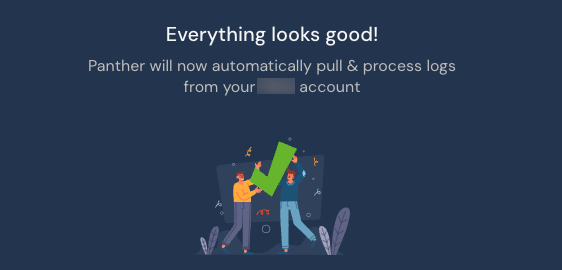
9. Click **Setup**. You will be directed to a success screen:\\
* You can optionally enable one or more [Detection Packs](https://docs.panther.com/detections/panther-managed/packs).
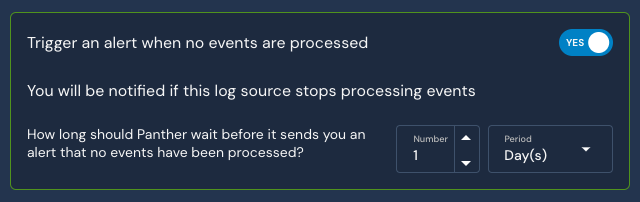
* The **Trigger an alert when no events are processed** setting defaults to **YES**. We recommend leaving this enabled, as you will be alerted if data stops flowing from the log source after a certain period of time. The timeframe is configurable, with a default of 24 hours.\\
## Panther-managed detections
See [Panther-managed](https://docs.panther.com/detections/panther-managed) rules for Asana in the [panther-analysis GitHub repository](https://github.com/panther-labs/panther-analysis/tree/master/rules/asana_rules).
## Supported log types
### Asana.Audit
The Audit Logs allow you to monitor and act upon critical events in your organization's Asana instance.
For more information, see the [Asana Documentation on Audit Log Events.](https://developers.asana.com/docs/audit-log-events)
```yaml
schema: Asana.Audit
parser:
native:
name: Asana.Audit
fields:
- name: gid
required: true
description: Global unique identifier of the AuditLogEvent.
type: string
- name: actor
required: true
description: User that triggered the event.
type: object
fields:
- name: actor_type
description: Type of actor.
type: string
- name: email
description: Email of the actor, if it is a user.
type: string
indicators:
- email
- name: gid
description: Global unique identifier of the actor, if it is a user.
type: string
- name: name
description: Name of the actor, if it is a user.
type: string
indicators:
- username
- name: context
description: Context from which this event originated.
type: object
fields:
- name: api_authentication_method
description: Authentication method used in the context of an API request.
type: string
- name: client_ip_address
description: IP address of the client that initiated the event.
type: string
indicators:
- ip
- name: context_type
description: Type of context.
type: string
- name: oauth_app_name
description: Name of the OAuth App that initiated the event.
type: string
- name: user_agent
description: User agent of the client that initiated the event.
type: string
- name: created_at
required: true
description: The time the event was created.
type: timestamp
timeFormat: rfc3339
isEventTime: true
- name: details
description: Event specific details. The schema depends on event type.
type: json
- name: event_category
description: Category that this event type belongs to.
type: string
- name: event_type
required: true
description: Type of the event.
type: string
- name: resource
description: The primary object that was affected by this event.
type: object
fields:
- name: email
description: The email of the resource, if applicable.
type: string
indicators:
- email
- name: gid
description: Global unique identifier of the resource.
type: string
- name: name
description: The name of the resource.
type: string
- name: resource_subtype
description: The subtype of resource.
type: string
- name: resource_type
description: The type of resource.
type: string
```
---
# Agent Instructions
This documentation is published with GitBook. GitBook is the documentation platform designed so that both humans and AI agents can read, navigate, and reason over technical content effectively. Learn more at gitbook.com.
## Querying This Documentation
If you need additional information that is not directly available in this page, you can query the documentation dynamically by asking a question.
Perform an HTTP GET request on the current page URL with the `ask` query parameter, and the optional `goal` query parameter:
```
GET https://docs.panther.com/data-onboarding/supported-logs/asana.md?ask=&goal=
```
`ask` is the immediate question: it should be specific, self-contained, and written in natural language.
`goal` is optional and describes the broader end goal you are ultimately trying to accomplish on behalf of the user. GitBook uses it to tailor the answer towards what is most useful for that goal.
The response will contain a direct answer to the question and relevant excerpts and sources from the documentation.
Use this mechanism when the answer is not explicitly present in the current page, you need clarification or additional context, or you want to retrieve related documentation sections.